



The U.S. economy created fewer jobs than forecast for a second month in September, a pessimistic sign about the state of the economy though the total was held back substantially by a sharp drop in government employment.
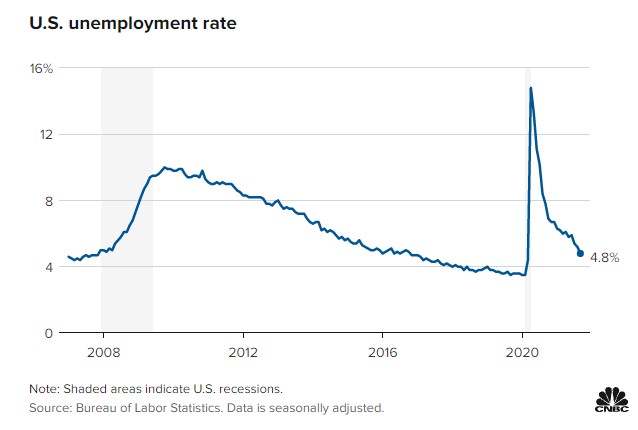
Nonfarm payrolls increased just 194,000 last month, compared to the 500,000 estimates, the Labor Department reported Friday. The unemployment rate also fell to 4.8%, partly reflecting fewer Americans looking for work.
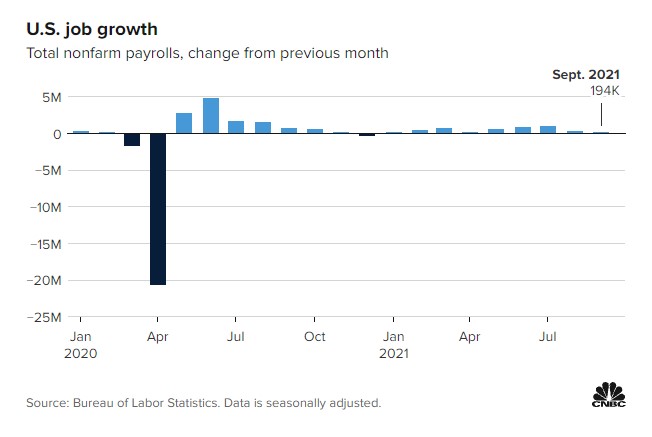
The number was hurt by a 123,000 decline in government payrolls, while private payrolls rose by 317,000.
What’s behind the job?
The drop in the jobless rate came as labor force participation edged lower with workers reluctant to return to the workforce.
According to the Labor Department, hiring for September was lower than typical, resulting in a decline. Payrolls at restaurants and bars, however, rose only slightly.
Vaccine mandates put in place by employers and some U.S. states in recent weeks could also have contributed to churn in the labor market and adding to hiring challenges.
The disappointing jobs figures indicate the central bank could delay its plan to start tapering asset purchases by the end of 2021.
While health concerns about the delta variant likely weigh on hiring in August and September, cases are dropping or poised to start falling in a majority of states. This could bring more Americans back to the labor force in the months ahead.
With the initial market reaction, the US Dollar came under modest selling pressure, losing 0.15% on the day at 94.05.
Join our Trading Community for more signals!