





The 2025 CME outage has sent shockwaves through the financial world, reminding everyone how fragile modern trading systems can be. For several hours, one of the world’s largest and most trusted exchanges went completely offline halting futures, commodities, and derivatives trading across multiple asset classes. This wasn’t just a technical glitch. It was a moment that exposed how deeply global markets depend on technology and how a single failure can ripple across continents, affecting traders, brokers, and investors everywhere.
What Happened During the CME Outage
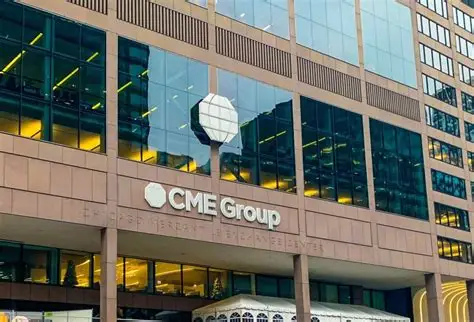
The Chicago Mercantile Exchange (CME), which handles trillions of dollars in daily trades, experienced a sudden halt due to a cooling system failure at one of its main data centers. This technical issue forced the exchange to suspend trading activity, freezing market operations for hours. For traders, this meant open positions were stuck, orders couldn’t be executed, and price movements were left hanging in uncertainty. The outage didn’t just affect the U.S.; It disrupted global markets that rely on CME data and liquidity.
Why This CME Outage Matters
The CME outage is more than a temporary inconvenience. It highlights a growing concern in the financial world, the vulnerability of trading infrastructure. Modern markets run on complex networks of servers, algorithms, and data centers. When one part fails, the entire system can grind to a halt. This event shows that even the most advanced exchanges are not immune to technical breakdowns. It also raises questions about risk management, backup systems, and contingency planning. How prepared are global exchanges to handle sudden outages? And how can traders protect themselves when the systems they rely on go dark?

Similar Events That Shook Global Markets
The 2025 CME outage isn’t the first time the financial world has faced a major trading disruption. Over the years, several similar incidents have exposed the weaknesses of even the most advanced exchanges.
1. August 2013 NASDAQ Flash Freeze
In 2013, the NASDAQ Stock Market suffered a three-hour trading halt caused by an overload in its data processor, the system responsible for handling price quotes and trade information. Like the CME outage, this event brought trading to a complete stop and affected a wide range of market participants. It revealed how a single point of failure in centralized systems can paralyze entire markets.
2. The 2010 Flash Crash
On May 6, 2010, U.S. stock markets experienced one of the most dramatic moments in trading history. The Dow Jones Industrial Average plunged nearly 1,000 points within minutes before quickly recovering. While this wasn’t a full outage, it showed how algorithmic trading and system errors can trigger chaos and erode investor confidence much like the uncertainty traders felt during the CME halt.
3. October 2020 Tokyo Stock Exchange Outage
In 2020, the Tokyo Stock Exchange suffered a full-day suspension of trading due to a hardware failure — the worst outage in its history. This event mirrored the CME outage in scale and impact, as it completely froze trading across all asset classes and forced regulators to review system resilience.
4. July 2024 LSEG Group Outage
Just a year before the CME incident, the London Stock Exchange Group (LSEG) faced a major technical issue that disrupted data and services across global markets. Although it didn’t result in a full trading halt, it caused widespread confusion and highlighted how interconnected global financial systems have become.
Relating Past Events to the 2025 CME Outage
Each of these historical events shares common themes with the CME outage technology dependence, infrastructure risk, and global ripple effects.
Scope and Impact: Like the 2010 Flash Crash and the Tokyo Stock Exchange outage, the CME event had a global impact across multiple asset classes.
Duration: The CME outage lasted several hours, similar to the 2013 NASDAQ Flash Freeze, but shorter than Tokyo’s full-day shutdown.
Cause: The CME incident was triggered by a hardware cooling failure, while past events were caused by software overloads or algorithmic errors proving that both hardware and software can be points of failure.

JOIN OUR TELEGRAM COMMUNITY
The Ripple Effect on Traders and Investors
When trading stops unexpectedly, the effects go beyond lost time. Prices can shift dramatically once markets reopen, creating volatility spikes and liquidity gaps. For institutional traders, this can mean millions in exposure. For retail traders, it can mean confusion, frustration, and uncertainty. Many turned to copy trading platforms and alternative brokers to monitor positions or hedge risks during the downtime. The outage also reignited discussions about decentralized trading systems and multi-exchange strategies, where traders diversify across platforms to reduce dependency on a single exchange.
The Objectives Is Building Resilient Markets
The 2025 CME outage is a wake-up call for the entire financial ecosystem. It shows that even with advanced technology, resilience and redundancy must be top priorities. Exchanges, brokers, and regulators will likely review their systems, test backup protocols, and strengthen cybersecurity and infrastructure safeguards. For traders, it’s a heads up to always have a risk management plan because even the most reliable systems can fail.
Moving forward as markets recover from the CME outage, one thing is clear; the future of trading depends on trust, technology, and transparency.
The incident may fade from headlines, but its lessons will shape how exchanges operate and how traders prepare for the unexpected. In a world where milliseconds matter, every glitch counts and every outage teaches the market something new.
Click here to visit our website
Subscribe to our blog for more trading insights, expert analysis, market updates and strategies – join our community today!