

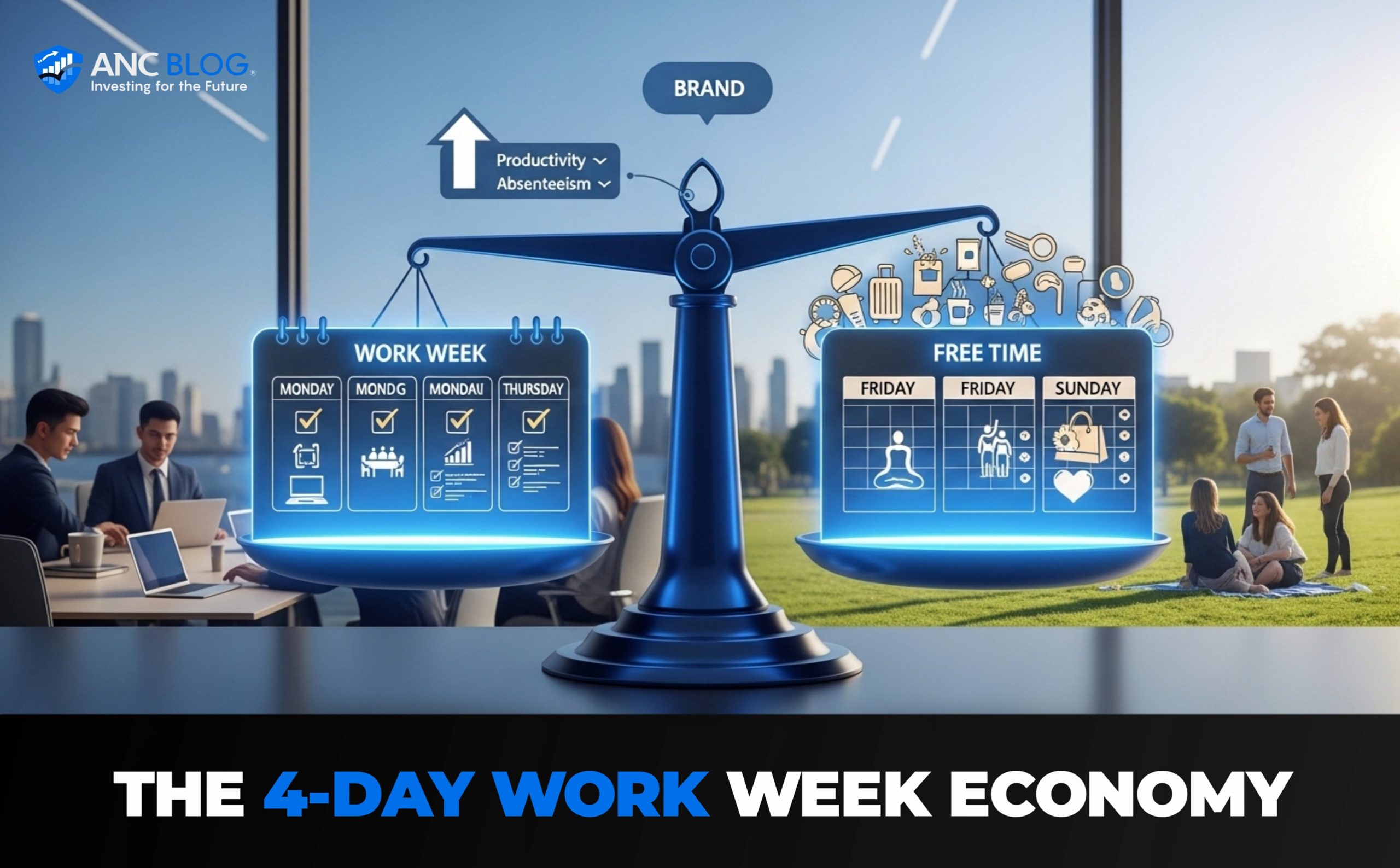

The world of work is changing fast, and one of the biggest shifts in 2026 is the rise of the 4-day work week. What started as an experiment in a few companies has now become a global movement. Businesses, employees, and even governments are rethinking what a “normal” workday should look like. Join our telegram channel.
This blog explores how shorter workdays are affecting income, productivity, and spending habits, and what this means for the future of the economy.
1. What Is the 4-Day Work Week?
The 4-day work week means employees work four days instead of five, usually without a pay cut. The goal is to improve work-life balance, boost productivity, and reduce burnout. Companies adopting this model often focus on efficiency like cutting unnecessary meetings, improving workflows, and using technology to get more done in less time. The idea is simple: work smarter, not longer. Open a capital account
2. Why the 4-Day Work Is Gaining Popularity
The shift toward shorter workdays is driven by several key factors:
- Employee well-being: Workers want more time for family, rest, and personal growth.
- Productivity gains: Studies show employees often achieve more in fewer hours.
- Talent attraction: Companies offering flexible schedules attract top talent.
- Technology: Automation and AI make it easier to maintain output with fewer hours.
- Sustainability: Fewer commutes mean lower carbon emissions and energy use.
In 2026, more organizations are realizing that happier employees often mean better business results.
3. How Shorter Workdays Affect Income
One major question is how the 4-day impacts income. In many cases, salaries remain the same, employees earn full pay for fewer hours. This approach rewards efficiency and helps retain skilled workers. However, in some industries, especially hourly or gig-based jobs, fewer workdays can mean lower earnings. To balance this, some companies are offering performance-based bonuses or flexible schedules that allow workers to pick up extra hours if needed.
Overall, the 4-day work is pushing businesses to rethink how they measure productivity and reward performance.
4. The Spending Shift: How Consumers Are Changing Habits
With an extra day off, people are spending their time and money differently.
- More leisure spending: Travel, dining, and entertainment industries are seeing growth.
- Health and wellness: People are investing more in fitness, hobbies, and mental health.
- Local economies: Shorter workdays encourage local shopping and community engagement.
- Reduced commuting costs: Workers save money on fuel, transport, and meals out.
This shift in spending habits is creating new opportunities for businesses that cater to lifestyle, wellness, and leisure markets.
5. The Business Perspective: Productivity and Profit
Many employers feared that fewer workdays would hurt profits. Surprisingly, the opposite is often true. Companies report higher productivity, lower absenteeism, and improved employee satisfaction. Workers are more focused, creative, and loyal. Shorter work days also reduce overhead costs such as less office energy use, fewer resources, and lower turnover rates. For many businesses, the 4-day model is proving to be both sustainable and profitable.
6. The Global Economic Impact
The 4-day work economy is reshaping how nations think about labor, productivity, and growth. Countries like Japan, the UK, and New Zealand have already tested shorter workdays with positive results. Governments are exploring policies that encourage flexible work models to boost national well-being and economic resilience. As more companies adopt this system, the global economy could see a shift toward sustainable productivity where quality of work matters more than quantity of hours.
7. Challenges of the 4-Day Work
Despite its benefits, the 4-day work isn’t perfect. Some industries, like healthcare, retail, and logistics, struggle to adapt due to continuous demand. Open a capital account
Other challenges include:
- Scheduling conflicts for global teams
- Maintaining customer service coverage
- Adjusting performance metrics
However, many of these issues can be solved with better planning, automation, and flexible scheduling.
8. The Future of Work: Balance Over Burnout
The 4-day represents more than just a schedule change; it’s a cultural shift. People are prioritizing balance over burnout, choosing meaningful work and personal time over endless hours. In 2026, this movement is redefining success. Productivity is no longer measured by time spent at a desk but by results, creativity, and well-being. As technology continues to evolve, the 4-day work could become the new global standard, a win for both workers and businesses.
Summary
The 4-day work week economy is transforming how people live, work, and spend. It’s improving mental health, boosting productivity, and reshaping consumer behavior. While challenges remain, the benefits are happier employees, stronger businesses, and a more balanced society. The future of work isn’t about working less, it’s working better. Join our telegram channel.