
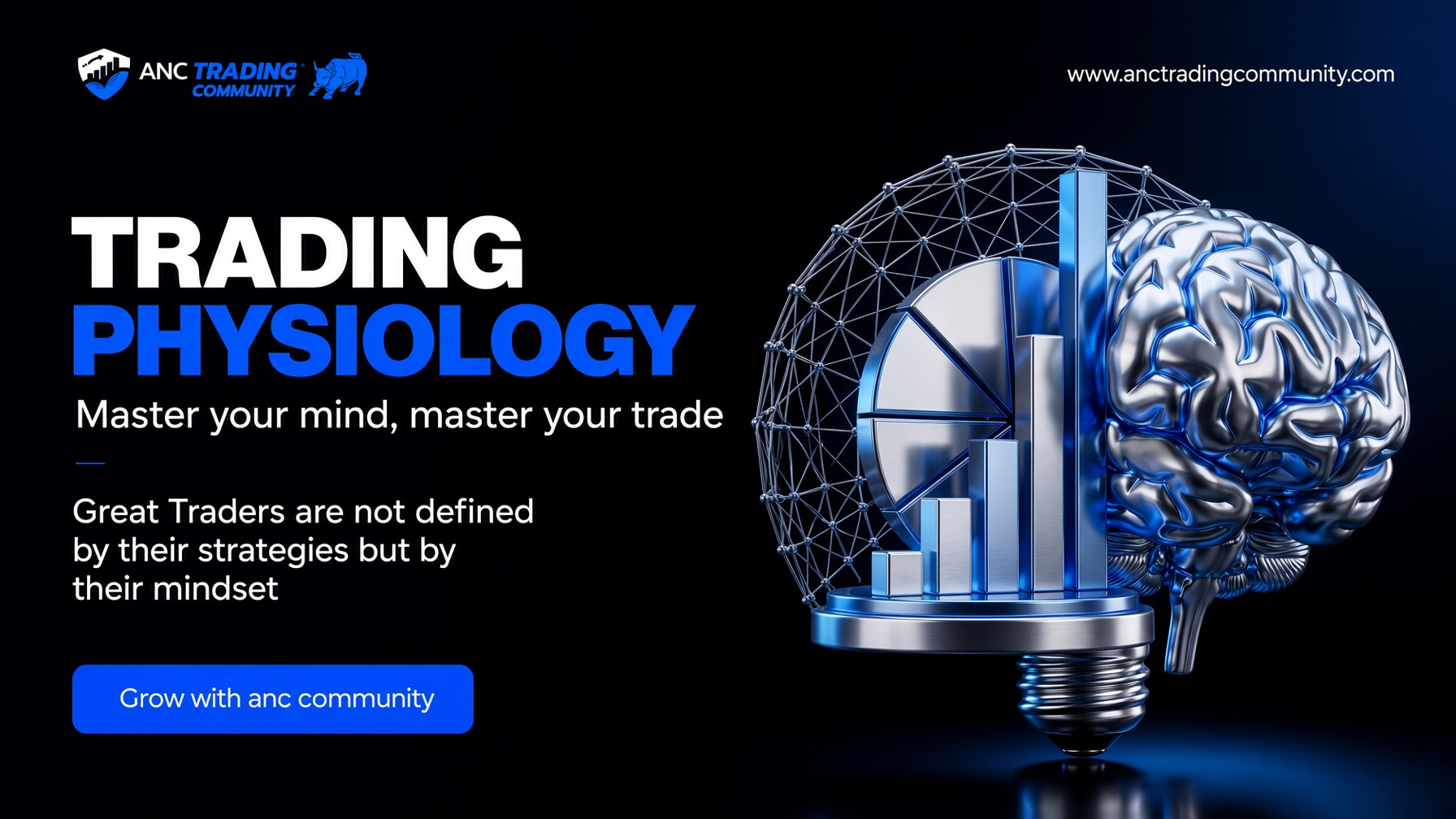

Great traders are not defined by their strategies but by their mindset.
That single truth sits at the heart of everything that separates consistent performers from the majority who struggle. Strategies can be taught. Setups can be back-tested. Indicators can be refined. But the ability to execute those strategies under pressure — without emotional interference — is a different skill entirely. This is the domain of Trading Physiology: the science and discipline of how your mind and body respond when real money is on the line.
What Is Trading Physiology?
Trading Physiology examines the biological and psychological systems that influence decision-making in the markets. It goes beyond the usual “trading psychology” conversations about discipline and fear. It looks at how stress hormones, attention, fatigue, cognitive biases, and emotional regulation actually affect the quality of your decisions in real time.
When you sit in front of a chart, you are not only reading price. You are also reading your own nervous system. Elevated cortisol narrows attention. Dopamine spikes after a win can encourage oversized risk. Fatigue from poor sleep reduces pattern recognition. These are not abstract ideas — they are measurable physiological states that either support or sabotage your edge.
Emotional Regulation Under Pressure
Why Mindset Outweighs Strategy
Most traders spend the majority of their development time hunting for better entries, better indicators, or more complex systems. The uncomfortable reality is that a mediocre strategy executed with emotional control will outperform an excellent strategy executed with emotional chaos.
The markets continuously test the same psychological vulnerabilities:
- The need to be right
- The fear of missing out
- The urge to recover losses quickly
- The discomfort of sitting in uncertainty
A robust strategy does not remove these pressures. It only gives you a framework. Your physiology determines whether you can actually follow that framework when it matters.
The Core Pillars of Trading Physiology
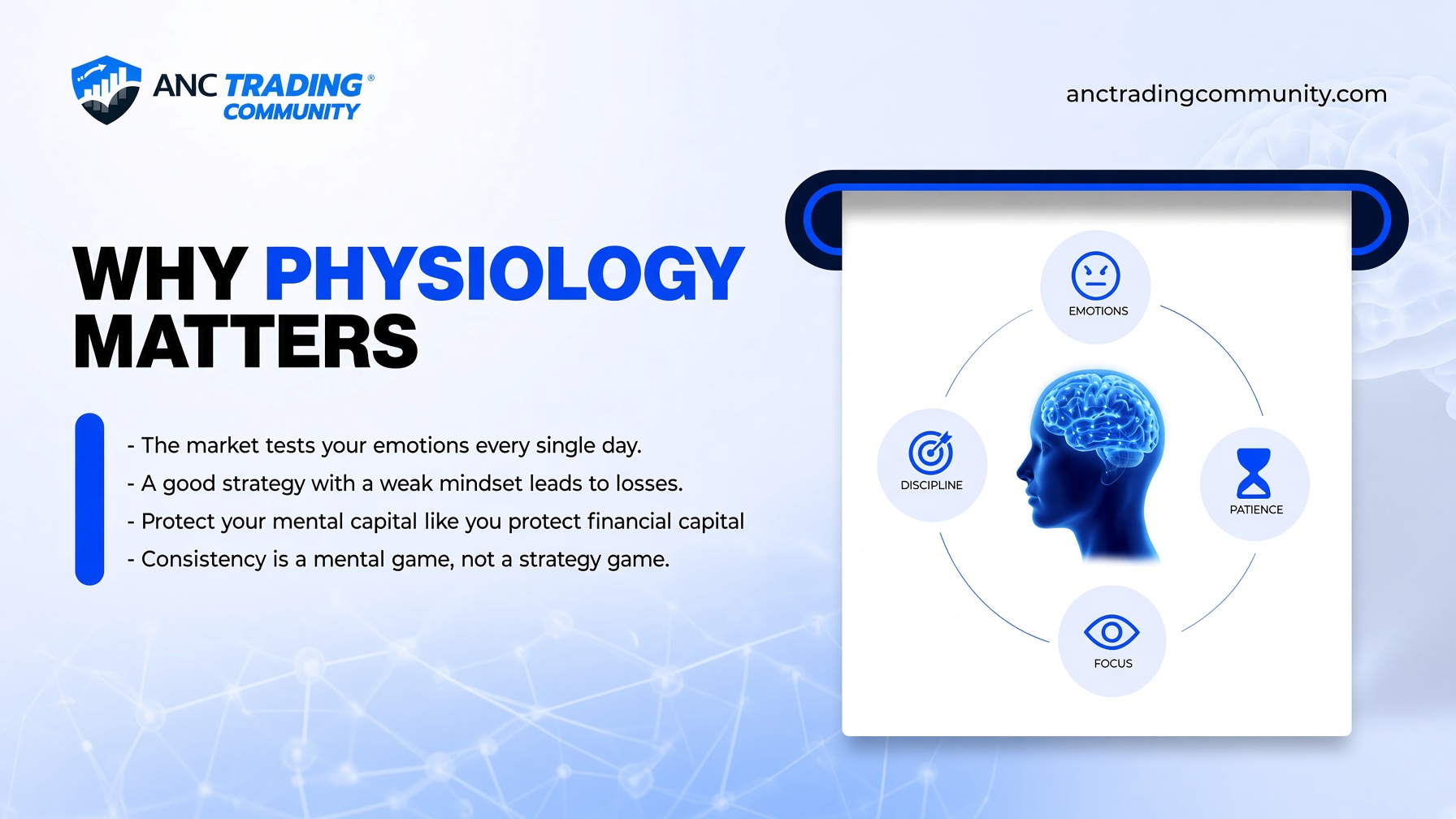
1. Emotional Regulation Under Pressure The ability to feel fear, greed, or frustration without acting on them is trainable. Traders who develop this capacity treat emotional spikes as information rather than commands. They notice the physical sensations — tight chest, shallow breathing, racing thoughts — and create space before responding.
2. Attention and Cognitive Load Management High-quality decisions require clear attention. Constant screen time, news noise, and multitasking degrade the very cognitive resources needed to read the market accurately. Deliberate periods of focused observation, followed by intentional recovery, protect decision quality.
3. Energy and Recovery Cycles Trading is a high-cognitive-load activity. Sleep quality, nutrition, and physical movement directly influence reaction speed, impulse control, and pattern recognition. Ignoring the body while trying to optimize the mind is a common and costly mistake.
4. Identity and Self-Talk How you describe yourself as a trader shapes your behaviour. “I am someone who follows my process” produces different actions from “I need this trade to work.” The internal narrative either supports or undermines the rules you claim to follow.
Practical Ways to Strengthen Trading Physiology
- Pre-session protocol: Before the market opens, spend five minutes assessing your current state. Rate energy, mood, and focus. Adjust position size or skip trading if the internal conditions are poor.
- Process journaling over outcome journaling: Record not only what the market did, but what you felt and how you responded. Over time this reveals your personal physiological patterns.
- Deliberate recovery: Schedule short breaks away from screens. Movement, breathing work, or even brief silence resets the nervous system more effectively than scrolling.
- Risk as a physiological tool: Position sizing is not only a mathematical decision. It is a tool for keeping your nervous system within a functional range. Oversized risk floods the system and collapses decision quality.

UEXO broker, UEXO copy trading
The Long Game
Mastering Trading Physiology is not a one-time achievement. It is a continuous practice of noticing, regulating, and refining how you show up each session. Strategies will evolve. Market conditions will change. The traders who last are those who treat their own mind and body as the primary instruments they must keep calibrated.
Great traders are not defined by their strategies but by their mindset. The charts will always be there. The question is whether you will be in a physiological state capable of reading them clearly when opportunity appears.
Grow with ANC Community. Master your mind. Master your trade.