



Several African countries are looking to launch their own virtual money, backed and issued by central banks as their appetite for cryptocurrency grows significantly across the continent.
Six African countriesーaccording to a tracker from US think-tank Atlantic Councilーare among 81 countries working to revolutionize global finance.
According to the tracker, Nigeria, despite recently banning cryptocurrency, is taking the lead in Africa as it plans to launch a pilot scheme before the end of 2021.

For one thing, over the last two years, the West African country has been exploring the option of a digital Naira. According to the country’s central bank, Nigeria is looking to improve the efficiency of the flow of foreign remittances, its second-largest foreign exchange earner after oil. A digital currency could assist in this efficiency, the reason Nigeria is now pushing harder for digital currency adoption.
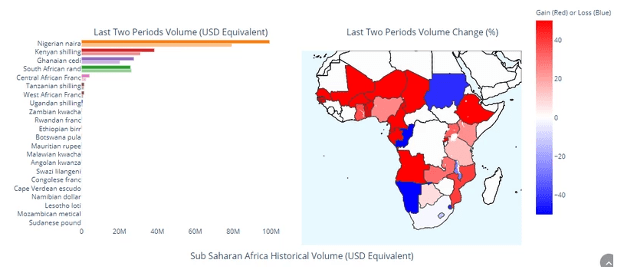
Other countries like Ghana, Morocco, Tunisia, Kenya, and Madagascar are still researching digital currencies.
Ghana is working towards establishing a digital currency project called E-Cedi, and will prioritize blockchain technology-related projects. Morocco’s central bank is also looking at the possibility of setting up a regulated digital currency ecosystem in the country, a development that comes after the country recently banned cryptocurrency.
Join our Trading Community for more signals!
Tunisia is exploring ways to advance its e-dinar, a blockchain-based digital version of the Tunisian dinar while the Central Bank of Madagascar has embarked on a project to study the issuance of a digital currency called e-Ariary.
Kenya is not left behind as the East African country’s central bank is also picking up interest in a regulated digital ecosystem in Kenya.
Other economies like Tanzania, South Africa, and Egypt are also exploring the best avenues and implementation strategies for a regulated regime.
What sparked the sudden interest in cryptocurrency?
It’s still expensive to send money home from overseas. With digital currencies, however, it’s much cheaper to send remittances to Africa. This high cost is a major motivator for the adoption of digital currencies by a growing number of African countries.
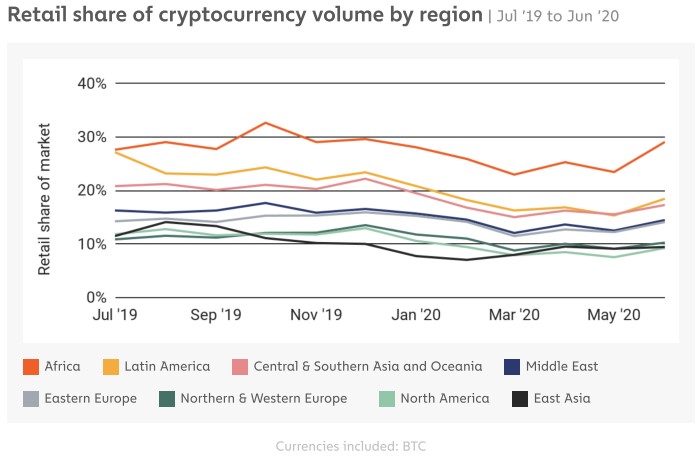
According to Chainalysis in its 2020 Geography of Crytocurrency Report (PDF), in June 2020, Africa only accounted for 29% of global retail share cryptocurrency volume, compared to other regions. In other words, roughly $3.7 billion worth of cryptocurrency was transferred to and from overseas addresses to those based in Africa.
A report from the World Bank shows that most individuals pay an average of between 9% to 15% in transaction fees to send remittances of below $200 to Africa. That’s way higher compared to a global average of 6.8%.
The future of crypto in Africa
Across the globe, central banks (80% of them) are exploring use cases for the implementation of digital currencies involving central bank digital currencies (CBDCs). Some are already testing proof-of-concept programs with cryptocurrency.
With governments across Africa accelerating efforts to adopt regulated digital currencies, it’s only a matter of time before CBDCs become a norm in Africa.
Join our Trading Community for more signals!