All Articles
Skip to content



Trading Physiology: Master Your Mind, Master Your Trade
Great traders are not defined by their strategies but by their mindset.
That single truth sits at the heart of everything that separates consistent performers from the majority who struggle. Strategies can be taught. Setups can be back-tested. Indicators can be refined. But the ability to execute those strategies under pressure — without emotional interference — is a different skill entirely. This is the domain of Trading Physiology: the science and discipline of how your mind and body respond when real money is on the line.
What Is Trading Physiology?
Trading Physiology examines the biological and psychological systems that influence decision-making in the markets. It goes beyond the usual “trading psychology” conversations about discipline and fear. It looks at how stress hormones, attention, fatigue, cognitive biases, and emotional regulation actually affect the quality of your decisions in real time.
When you sit in front of a chart, you are not only reading price. You are also reading your own nervous system. Elevated cortisol narrows attention. Dopamine spikes after a win can encourage oversized risk. Fatigue from poor sleep reduces pattern recognition. These are not abstract ideas — they are measurable physiological states that either support or sabotage your edge.
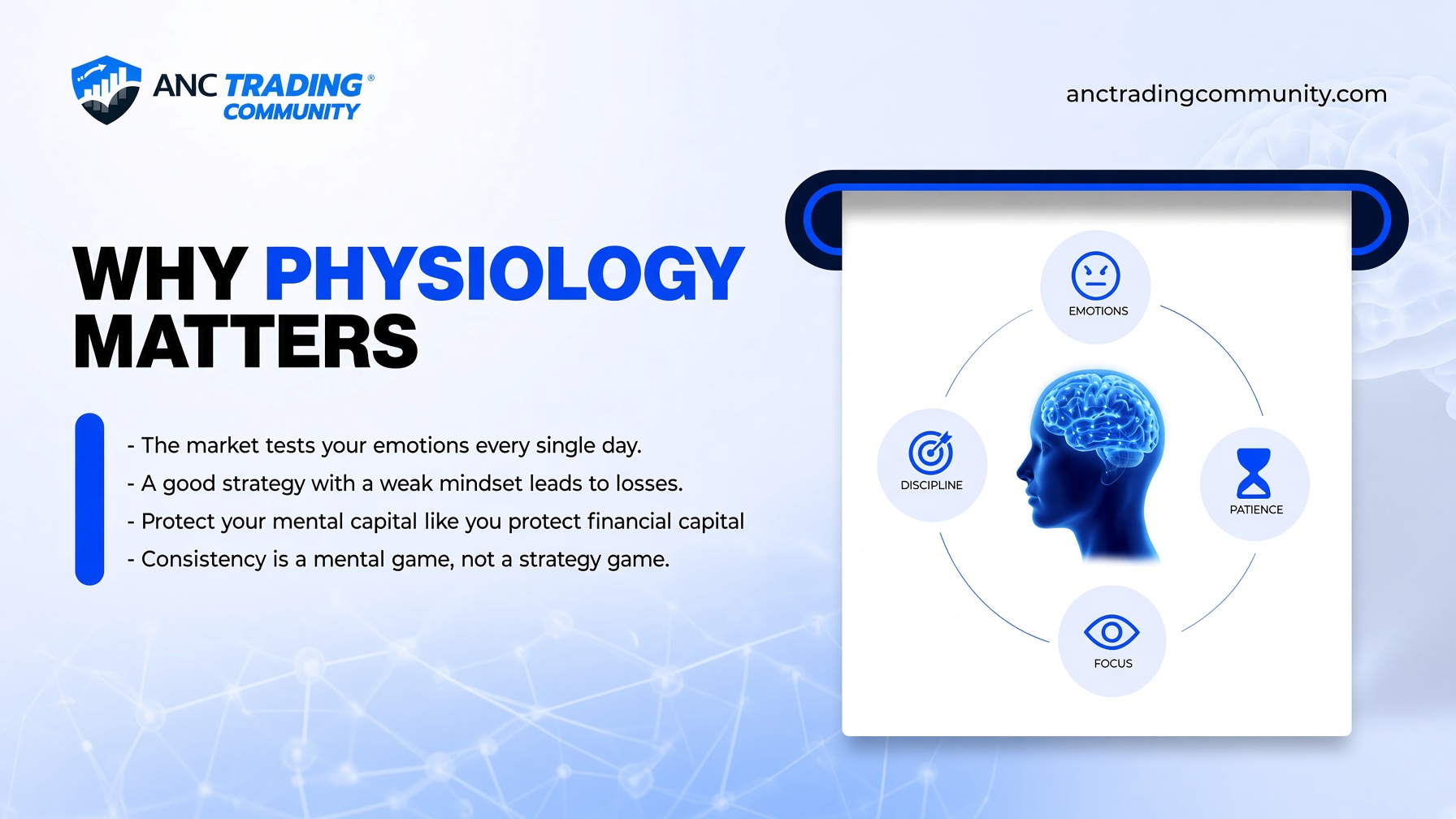
Emotional Regulation Under Pressure
Why Mindset Outweighs Strategy
Most traders spend the majority of their development time hunting for better entries, better indicators, or more complex systems. The uncomfortable reality is that a mediocre strategy executed with emotional control will outperform an excellent strategy executed with emotional chaos.
The markets continuously test the same psychological vulnerabilities:
- The need to be right
- The fear of missing out
- The urge to recover losses quickly
- The discomfort of sitting in uncertainty
A robust strategy does not remove these pressures. It only gives you a framework. Your physiology determines whether you can actually follow that framework when it matters.
The Core Pillars of Trading Physiology
1. Emotional Regulation Under Pressure The ability to feel fear, greed, or frustration without acting on them is trainable. Traders who develop this capacity treat emotional spikes as information rather than commands. They notice the physical sensations — tight chest, shallow breathing, racing thoughts — and create space before responding.
2. Attention and Cognitive Load Management High-quality decisions require clear attention. Constant screen time, news noise, and multitasking degrade the very cognitive resources needed to read the market accurately. Deliberate periods of focused observation, followed by intentional recovery, protect decision quality.
3. Energy and Recovery Cycles Trading is a high-cognitive-load activity. Sleep quality, nutrition, and physical movement directly influence reaction speed, impulse control, and pattern recognition. Ignoring the body while trying to optimize the mind is a common and costly mistake.
4. Identity and Self-Talk How you describe yourself as a trader shapes your behaviour. “I am someone who follows my process” produces different actions from “I need this trade to work.” The internal narrative either supports or undermines the rules you claim to follow.
Practical Ways to Strengthen Trading Physiology
- Pre-session protocol: Before the market opens, spend five minutes assessing your current state. Rate energy, mood, and focus. Adjust position size or skip trading if the internal conditions are poor.
- Process journaling over outcome journaling: Record not only what the market did, but what you felt and how you responded. Over time this reveals your personal physiological patterns.
- Deliberate recovery: Schedule short breaks away from screens. Movement, breathing work, or even brief silence resets the nervous system more effectively than scrolling.
- Risk as a physiological tool: Position sizing is not only a mathematical decision. It is a tool for keeping your nervous system within a functional range. Oversized risk floods the system and collapses decision quality.
UEXO broker, UEXO copy trading
The Long Game
Mastering Trading Physiology is not a one-time achievement. It is a continuous practice of noticing, regulating, and refining how you show up each session. Strategies will evolve. Market conditions will change. The traders who last are those who treat their own mind and body as the primary instruments they must keep calibrated.
Great traders are not defined by their strategies but by their mindset. The charts will always be there. The question is whether you will be in a physiological state capable of reading them clearly when opportunity appears.
Grow with ANC Community. Master your mind. Master your trade.
Read ArticleThe Great Platform Shift 2026: Why Leading Brokers Are Breaking Free from MetaTrader Dependence
For nearly two decades, MetaTrader 4 and later MetaTrader 5 defined the retail forex experience. Brokers licensed the software, traders downloaded the familiar desktop terminal, and a massive ecosystem of Expert Advisors, indicators, and signal services grew around it. That model is now under pressure.
In 2026, major brokers are actively restricting MetaTrader access, limiting available instruments on MT platforms, and steering clients toward their own proprietary systems. This is not a quiet technical upgrade. It is a strategic realignment driven by control over data, the ability to embed AI natively, broader multi-asset offerings, and tighter regulatory compliance.
The shift is reshaping how retail clients trade and how introducing brokers (IBs) and affiliates evaluate partnerships.
Why MetaTrader Dominance Is Eroding
MetaQuotes built an extraordinarily successful product. MT4 became the default because it was reliable, relatively open, and easy for brokers to white-label. The MQL language enabled a huge third-party developer community. For years this created network effects that were hard to challenge.
Several developments exposed the risks of depending on a single external vendor:
- MetaQuotes stopped issuing new MT4 licenses years ago. Existing licences continue, but the platform is in maintenance mode with no meaningful new development.
- The 2022 temporary removal of MetaTrader apps from the Apple App Store highlighted distribution vulnerability.
- The 2024 crackdown on prop firms serving U.S. clients using MetaTrader infrastructure caused widespread disruption. Brokers and firms running proprietary or alternative platforms were far less affected.
- Security and compliance expectations have risen. Older codebases require more effort and cost to keep current.
At the same time, brokers themselves have matured. Larger firms now possess the engineering resources and client volume to justify building and maintaining their own platforms. Ownership delivers advantages a licensed terminal cannot match.
What Proprietary Platforms Actually Deliver
When a broker controls the platform, several strategic benefits follow.
Data ownership becomes complete. Every click, order, position, deposit pattern, and support interaction stays inside the broker’s systems. This data powers better risk management, more accurate client lifetime value models, and personalized product features. On a third-party platform, much of that behavioural signal is harder or impossible to capture cleanly.
Native AI integration is simpler and more powerful. Proprietary systems can embed analytics, trade ideas, risk warnings, and even agent-style assistants without relying on external APIs or workarounds. In 2026, brokers are experimenting with Model Context Protocol (MCP) connections that let external AI tools read account data or, in some cases, execute under strict controls. Doing this inside a closed ecosystem is cleaner from both a technical and compliance perspective. Start Trading with Lirunex

Trading with ECN
Multi-asset coverage expands dramatically. Many proprietary platforms offer thousands of instruments—indices, stocks, commodities, and more—while MetaTrader builds at the same broker are often restricted to a much smaller set. IG, for example, has long limited MetaTrader to a fraction of the markets available on its main platform.
Compliance and operational control improve. Regulators increasingly expect brokers to demonstrate oversight of client activity, marketing, and risk. Owning the front end makes audit trails, product gating by jurisdiction, and real-time monitoring more straightforward.
Brand differentiation finally becomes possible. When every broker offers essentially the same MetaTrader interface, competition collapses to spreads and bonuses. A distinctive proprietary experience lets brokers compete on usability, research integration, and unique tools.
How Leading Brokers Are Positioning
The movement is visible among established names, though approaches differ:
Smaller brokers unable to fund full in-house builds are turning to modern white-label alternatives such as Match-Trader or DXtrade rather than remaining solely dependent on MetaQuotes.
The optimal choice depends on the trader’s profile. Pure algorithmic traders with heavy EA reliance may still prioritise brokers that keep robust MetaTrader support. Multi-asset discretionary traders, those interested in AI-assisted workflows, or clients seeking the widest product range will often find proprietary platforms superior in 2026.
Impact on Copy Trading and Signal Ecosystems
This shift has particular consequences for social and copy trading.
On MetaTrader, copy trading and signal following frequently relied on external services or the platform’s own limited social features. Proprietary systems allow brokers to design tighter, more transparent, and better-risk-managed copy products. Performance data, risk metrics, and allocation controls can live natively inside the same environment where the trades execute.
For signal providers and strategy managers, the landscape becomes more fragmented. A strategy that performed well via MetaTrader signals may need rebuilding or re-listing on each major proprietary platform. Brokers that successfully create high-quality, regulated social layers gain a stronger retention tool and a clearer value proposition for IBs who want quality rather than pure volume.
What Traders and Introducing Brokers Should Evaluate in 2026
When assessing platforms today, look beyond the brand name of the terminal:
- Instrument coverage: How many markets are available on the main platform versus any MetaTrader version offered?
- AI and automation depth: Are tools native, transparent, and controllable, or superficial marketing features?
- Data and execution quality: Can you see realistic fills, slippage statistics, and order book depth?
- Ecosystem continuity : If you rely on EAs or specific indicators, confirm long-term MetaTrader support or viable migration paths.
- Mobile and web parity: Many proprietary platforms now match or exceed desktop usability; test both.
- Regulatory and jurisdictional fit: Proprietary control often enables cleaner product restrictions by region.
- Copy and social features : Examine transparency of performance reporting, risk controls, and fee structures.
For introducing brokers, the question is strategic: Does the broker’s platform strategy create stickier, higher-quality clients, or does it still depend on the same MetaTrader volume game that every competitor can also play?
Join the Top leading Educational platform ANC Trading community
MetaTrader is not disappearing overnight. It retains a large installed base, especially among algorithmic traders, and MetaQuotes continues to develop MT5, including recent AI-related features. Yet the centre of gravity is shifting.
Brokers that treat platforms as strategic assets rather than cost centres are building defensible advantages in data, AI capability, product breadth, and compliance. Those that remain pure MetaTrader resellers face increasing pressure on margins and differentiation.
For traders, the practical implication is straightforward: platform choice in 2026 is no longer just about which terminal feels familiar. It is about which environment best supports the markets you trade, the tools you need, and the long-term reliability of the broker behind it.
The platform wars are no longer theoretical. They are already changing where—and how—the next generation of retail and professional flow is executed.
Read ArticleWhat This Week Really Exposed in the FX Space ( Brokers & Prop Firms)
This week delivered a clear stress test for both prop firm traders and regular FX traders.
Oil stayed elevated on Middle East tensions. Gold reacted to the political noise. Trump’s comments kept pressure on risk sentiment. Volatility increased. Spreads widened. And the usual cracks in the industry showed up again, especially around prop firm rules and broker withdrawals.
Here’s a detailed breakdown of what actually happened and what traders need to pay attention to.
1. Volatility Is Not the Real Problem, Poor Position Sizing Is
When oil moves hard, gold reacts to political headlines, and risk sentiment flips on Trump-related comments, correlated pairs often move together. Many traders still size positions as if the market is calm.
That gap between the risk you think you’re taking and the risk you’re actually taking is where most accounts get damaged. Join ANC Trading community on Telegram to improve your trading skills and strategy.
This week was another reminder: if your average risk per trade does not shrink when volatility expands (especially around oil, gold, and geopolitical headlines), you are not managing risk; you are simply hoping.

Gold reacted to the political noise
2. Prop Firms Are Getting Better at Writing Rules That Favour Them
This is becoming more common and more sophisticated.
Many firms now use technical or deliberately vague language in their policies that gives them wide discretion. Common examples include:
- Broad “news trading” definitions that can catch almost any trade around high-impact events or political headlines
- Poorly defined “consistency rules” that allow firms to interpret large winners or uneven performance as violations
- Restrictions on “prohibited strategies” written in open-ended language
- Clauses such as “exploiting the system,” “abnormal trading activity,” or “risk department review” that allow delayed or denied payouts without clear criteria
The problem is not that rules exist. Every serious firm needs them. The real issue is when the language is technical or ambiguous on purpose, so the firm holds the advantage in interpretation.
A trader can follow the spirit of the rules and still lose a payout because the firm’s risk team decides otherwise. If you trade with prop firms, treat the rulebook like a legal contract. Look for clarity. Vague language is rarely accidental.
3. Brokers Are Starting to Behave More Like Prop Firms, Especially on Withdrawals
This is one of the more concerning shifts in the industry right now.
Some brokers are introducing trading restrictions that used to be more common in prop firms: limits on news trading, minimum holding times, strategy restrictions, and sudden rule changes. At the same time, broker withdrawal complaints are rising. Common issues include:
- Holding withdrawals under “compliance review” or “security checks” for extended periods
- Slow processing even when documentation is complete
- Spreads and slippage that widen significantly during volatility (oil moves, gold spikes, political headlines), then return to normal once the move is over
- Payment method problems that only appear when traders try to withdraw profits
Quiet markets hide these problems. High-volatility weeks (like this one) expose them quickly.
Trading with ECN
What Actually Matters When Choosing a Broker
Ignore the marketing. Focus on these factors instead:
- Regulation quality: Tier-1 regulators still matter more than most people admit.
- Withdrawal track record: How fast do they actually pay during high-volatility periods?
- Clarity of rules: Are trading restrictions clearly written, or do they leave room for discretionary decisions?
- Execution under stress: How do spreads and fills behave when oil, gold, or political headlines move the market?
- Client fund protection: Segregated accounts and clear policies.
- Payment reliability: Multiple working methods and a consistent history of processing withdrawals without unnecessary friction.
A broker that looks fine in calm markets can become a serious problem the moment volatility rises. That is when real quality shows.
Looking Ahead
Next week brings a heavy cluster of central bank decisions (Fed, Bank of England, and Bank of Japan). Treat it as high-risk territory. Reduce size, respect the rules of whatever firm or broker you are using, and prioritize survival over trying to catch every move.
The combination of oil, gold, and political tension this week did more than move prices. It exposed how some prop firms use technical language to their advantage and how certain brokers handle withdrawals when markets get difficult.
Traders who ignore these issues usually learn the hard way. Join Copy AncFX
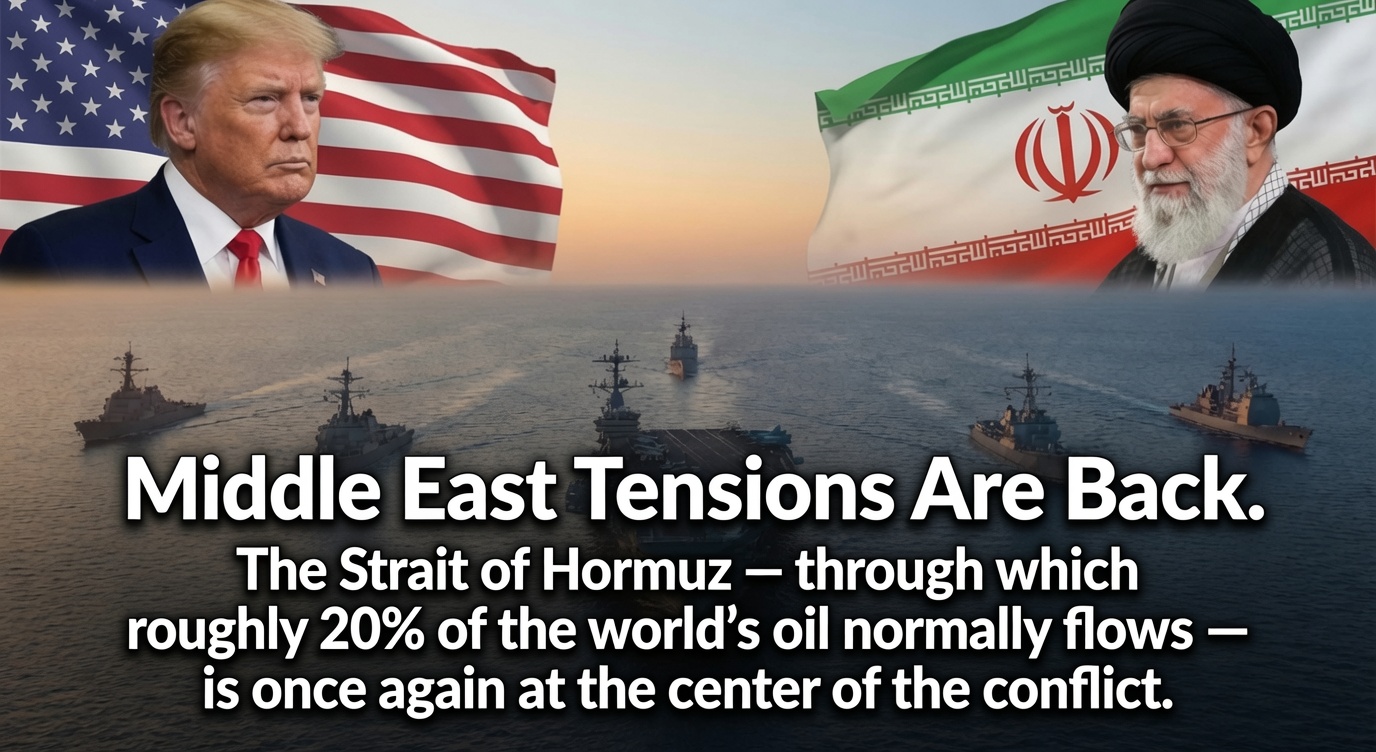
Read ArticleMiddle East Tensions Are Back: How Trump’s Actions Are Driving Oil Volatility
The Strait of Hormuz is once again in the spotlight. After a fragile period of relative calm, fresh strikes and conflicting claims over the waterway have pushed Brent crude back above $86 a barrel.
The brief calm in the Middle East is over. On July 14, 2026, President Donald Trump formally notified Congress that U.S. hostilities with Iran resumed on July 7. The notification starts a new 60-day clock under the War Powers Resolution, allowing the administration to continue military operations without immediate new congressional approval.
This is not a minor procedural step. It confirms what markets had already begun pricing in: the fragile ceasefire that held for several weeks has collapsed, and the risk of further escalation is real.

What Triggered the Latest Escalation
The latest round began with Iranian attacks on commercial shipping near the Strait of Hormuz, followed by ballistic missile strikes by Iran’s Islamic Revolutionary Guard Corps on U.S. bases in Jordan and Bahrain. Those missiles were intercepted and caused no casualties, but the response from Washington was swift.
Trump declared the previous ceasefire “OVER” in clear terms. He has demanded that Iran publicly commit to stopping all attacks on ships in the Strait of Hormuz and guarantee that the waterway remains fully open with no tolls or restrictions. At the same time, U.S. forces have adjusted their posture, including suspending the withdrawal of aerial refueling aircraft from Israel.
These moves signal that the White House is prepared to maintain pressure rather than return to the earlier de-escalation path.
Trump’s Approach to the Strait of Hormuz
Throughout 2026, Trump has treated the Strait of Hormuz as both a strategic and political priority. He has repeatedly stated that the United States will not accept Iranian control or interference over the waterway, through which roughly 20% of the world’s oil normally flows.
He has gone further in the past, floating the idea of the U.S. taking operational control of the Strait and even imposing its own fees (what he once called a “Guardian Angel” system). While those more extreme proposals have not been implemented, the underlying message remains consistent: any attempt by Iran to close or disrupt the Strait will be met with force.
The current War Powers notification reinforces that posture. By formally restarting the clock on military operations, Trump has kept the option of further strikes on the table while continuing to demand that Iran back down on shipping threats.
How Markets Are Reacting
Oil markets have responded quickly. Brent crude has climbed back above $86 a barrel as traders reassess the risk of renewed disruption to Persian Gulf exports. The price action reflects uncertainty more than an actual full closure of the Strait. Tanker traffic continues, but the threat of further attacks or a broader military response is enough to support higher prices.
This is classic geopolitical risk premium. When the White House and Tehran exchange threats and military actions, oil traders add a buffer for potential supply interruptions. That buffer is now back in the market after weeks of relative calm following the earlier ceasefire.
Volatility has increased not only in crude but also across related assets. Traders are watching every statement from Trump and every Iranian response for signs of whether the situation will stabilize or deteriorate further.
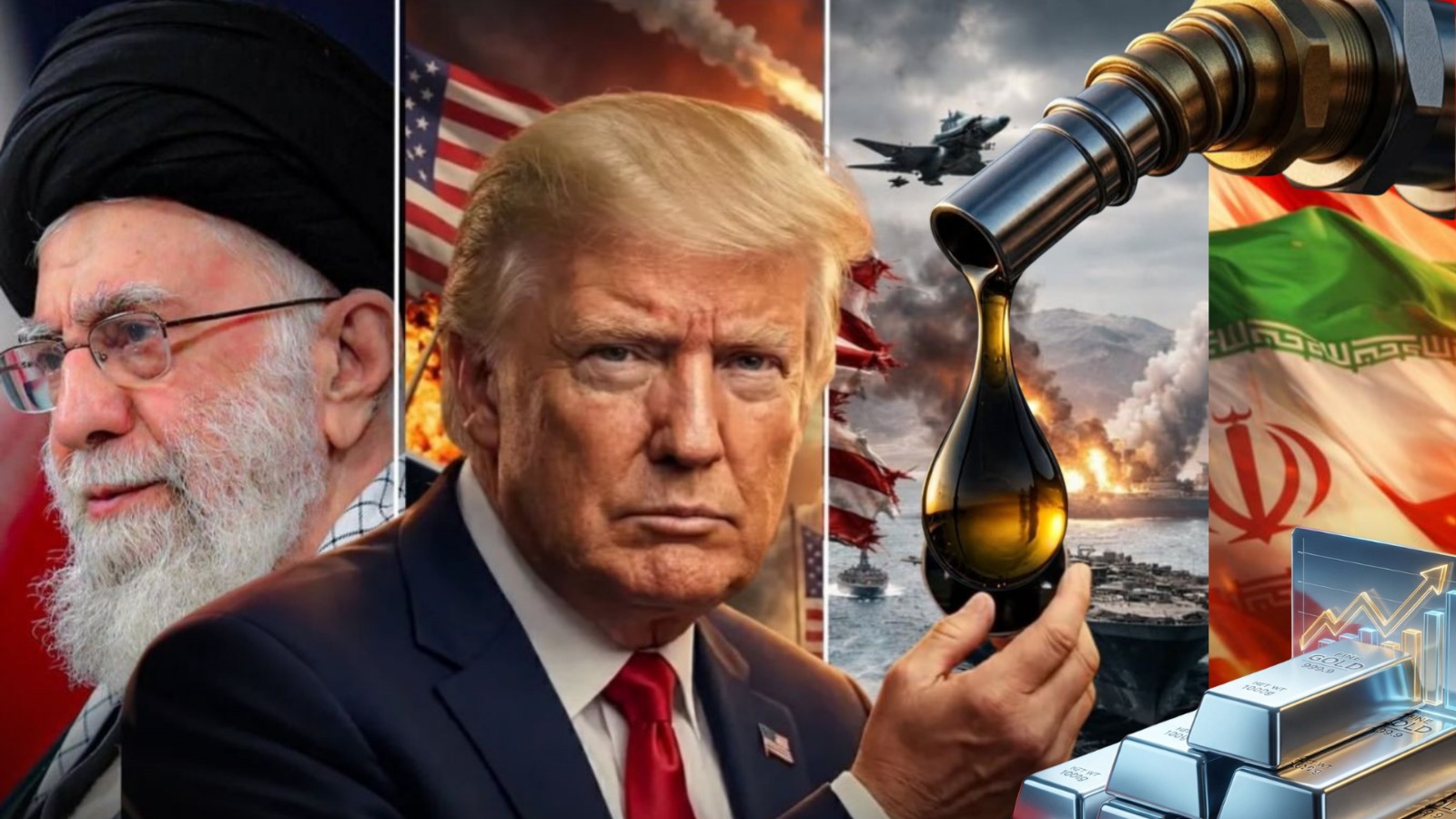
Middle East Tensions Are Back: How Trump’s Actions Are Driving Oil Volatility
The Bigger Picture
What makes the current moment significant is the combination of military escalation and political clarity from the U.S. side. Trump is not signaling a desire for prolonged war, but he is also not offering Iran an easy off-ramp. By notifying Congress and publicly declaring the ceasefire over, he has removed ambiguity.
For oil markets, ambiguity is often more dangerous than clarity. Right now, the market knows the ceasefire is finished and that the U.S. is prepared to act. What it does not yet know is how far either side is willing to go in the coming weeks.
That uncertainty is the primary driver of the latest rise in oil volatility.
What Comes Next
The next phase will likely be defined by two things: Iran’s response to Trump’s demands on shipping, and whether the United States follows the War Powers notification with further military action. Any major strike on Iranian targets or a sustained disruption to tanker traffic would likely push oil prices significantly higher. A de-escalation or renewed talks could reverse the recent gains just as quickly.
For now, the message from Washington is clear. The pause is over. Middle East tensions are back, and oil markets are once again pricing in the risk that comes with them. join ANC Trading community
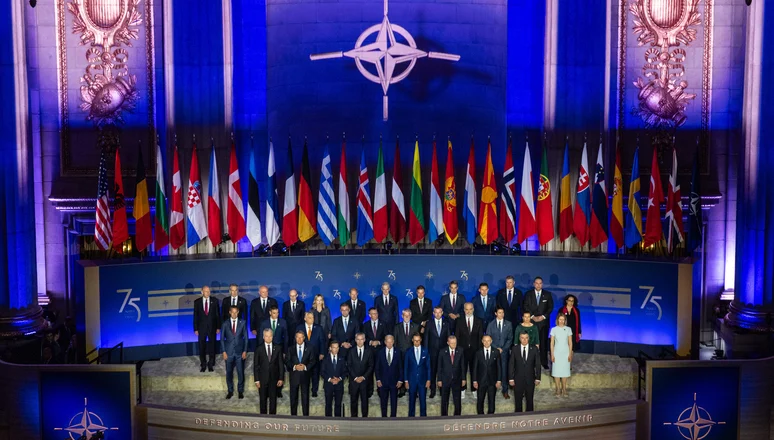
Read ArticleNATO Summit Ankara 2026: Impact on Oil, Gold Prices & European Defense Spending
NATO leaders gather in Ankara, Turkey, on July 7–8, 2026, for one of the alliance’s most sensitive summits in recent years. The meeting takes place at a moment of open friction with Washington. President Donald Trump has called the current level of U.S. support for NATO “ridiculous” and described the relationship as unbalanced. Given this stance, expectations are rising that the European continent will have to assume greater responsibility for its own defense.
In this environment of heightened geopolitical risk and market volatility, many investors are increasingly turning to AncFX copy trading to follow disciplined, risk-managed strategies without having to manage every position themselves.
The issue is no longer merely theoretical and is already producing concrete political consequences. In the United Kingdom, divergences and pressure around the military budget added to a broader political crisis, which led Prime Minister Keir Starmer to announce his departure from office. A new leadership transition is now underway, adding another layer of uncertainty for markets.
Educational platforms such as the ANC Trading Community are playing an important role in helping traders and investors better understand the bigger picture behind these geopolitical shifts and their potential effects on currencies, commodities, and interest rates.
The Core Agenda in Ankara
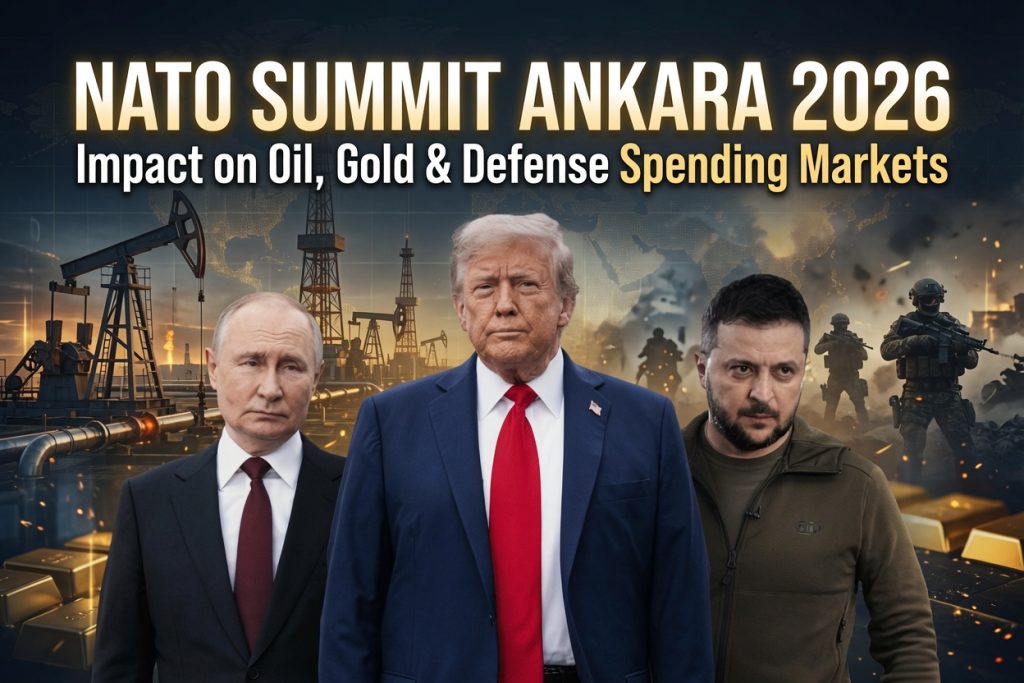
NATO Summit Ankara 2026: Impact on Oil, Gold & Defense Spending Markets.
The summit’s main priorities include accelerating defense spending and industrial production across the alliance, delivering on commitments made at previous summits (particularly regarding Ukraine), and addressing capability gaps exposed by recent conflicts.
European allies have already signaled willingness to move toward much higher spending targets. Several countries are preparing frameworks that could see defense and related security spending approach 5% of GDP by 2035. This represents a historic shift from the long-standing 2% guideline and will have long-term implications for European fiscal policy and inflation dynamics.
The Shadow of the Israel-Iran War
The summit takes place just months after the most serious direct confrontation between Israel, the United States, and Iran in decades. The war that began on February 28, 2026, saw U.S. and Israeli strikes that killed Supreme Leader Ali Khamenei and targeted Iran’s military and nuclear infrastructure. Iran responded with missile and drone attacks across the region, including threats to close the Strait of Hormuz.
Although a ceasefire was reached in April, the conflict left deep scars on global energy markets and regional stability. Ongoing tensions continue to influence oil price movements and safe-haven demand for gold.
Start trading with a multi regulated broker UEXO
Oil Prices: From Spike to Stabilization — With Risks Remaining
The 2026 Iran war caused one of the sharpest oil price surges in recent history. Brent crude briefly exceeded $120 per barrel in March. As of early July 2026, Brent has fallen back to the $71–72 per barrel range. The decline reflects the ceasefire and higher supply responses. However, the market remains sensitive to any renewed escalation in the Middle East.
Gold as a Safe Haven
Gold prices have been extraordinarily volatile in 2026. They surged above $5,400 per ounce earlier in the year amid war fears before correcting. As of early July, spot gold trades around the $4,150–4,200 level. Geopolitical uncertainty from both the Middle East and transatlantic tensions continues to provide underlying support, even as higher-for-longer interest rate expectations exert pressure.
Interest Rates and the Fiscal Cost of Rearmament
Higher structural defense spending across Europe could prove mildly inflationary over the medium term. This may limit how aggressively central banks like the ECB can cut rates. Markets will closely watch whether the Ankara summit produces credible, time-bound spending plans that could influence fiscal trajectories and borrowing costs in the coming years.
What Investors Should Watch Next
In the days and weeks following the summit, markets will focus on specific defense spending commitments from major European economies, any new statements on transatlantic burden-sharing, and fresh developments in the Middle East. Defense and aerospace stocks, along with commodities, are likely to remain sensitive to the outcome. master smart trading strategies for 2026
Join AncFX today and gain access to professional copy trading strategies designed for volatile geopolitical environments. Follow experienced leaders like ABT Trader and build a more disciplined approach to navigating complex global markets.
Visit AncFX now to explore copy trading opportunities and stay ahead of the curve.
Read Article